


Best Clean Shave Creams for Sensitive Skin (Paraben & Sulfate-Free)
Paraben-free, sulfate-free, and synthetic fragrance-free picks for reactive skin - including a shave cream featured by GQ and Men's Journal.
Key Takeaways
- Ursa Major Stellar Shave Cream is free from parabens, sulfates, petrochemicals, and synthetic fragrance, and has been featured by GQ and Men's Journal.
- 60-70% of women and 50-60% of men report sensitive skin, yet most conventional shave creams contain sulfates and synthetic fragrance - two of the top triggers for post-shave irritation.
- Several parabens are banned in the EU, and clean shave creams skip the whole preservative class; going paraben-free is a simple way to cut one more synthetic from your daily routine.
- Sulfates like SLS dry skin out and leave it red - clean shave creams use plant-derived lubricants and humectants like aloe, glycerin, and shea butter instead.
- Letting shave cream sit on skin for 2-3 minutes before shaving and swapping in a fresh blade regularly significantly reduces irritation on sensitive skin.
Sensitive skin and conventional shave cream are a poor match. Research shows that clean alternatives - free from parabens, sulfates, and synthetic fragrance - deliver a closer, calmer shave without stripping your skin barrier. Ursa Major Stellar Shave Cream leads the pack, but this guide covers everything you need to choose the right formula for reactive skin.
Why Conventional Shave Creams Irritate Sensitive Skin
Shaving is one of the most mechanically aggressive things you do to your skin daily. Research shows that most men experience post-shave irritation at least occasionally, and for many it shows up as redness or burning after every shave. For people with acne-prone skin, that irritation can directly trigger breakouts. And it is not just men - per one review, 60-70% of women and 50-60% of men report some degree of sensitive skin.
The core problem is what researchers call the shaving challenge: the same actions that improve hair removal also increase damage to surrounding skin. Most conventional shave creams compound this by including harsh chemical preservatives, foaming agents, and masking fragrances that strip the skin barrier before the blade even touches it. The most common shaving-related skin problems - irritation, dryness, razor burn, and ingrown hairs - are made worse by these ingredients, not better.
Why Parabens, Sulfates, and Synthetic Fragrance Irritate Sensitive Skin
Three ingredient categories cause the most post-shave grief on sensitive skin. Here is what each one does and why it belongs off your bathroom shelf.
- Parabens (methylparaben, propylparaben, and others): Synthetic preservatives that are restricted in the EU; several variants (isopropylparaben, isobutylparaben, phenylparaben) are banned there outright. Skipping them in a rinse-off product like shave cream is an easy way to simplify what touches your skin every day.
- Sulfates (SLS and SLES): Sodium lauryl sulfate and sodium laureth sulfate are added to create visible lather. They strip the skin of its natural oils, leaving it dry, red, and prone to irritation - exactly the opposite of what sensitive skin needs before a blade pass.
- Synthetic fragrance / parfum: Companies are not legally required to disclose what is inside a fragrance blend - and it can hide phthalates and other irritants. The Scientific Committee on Consumer Safety recognizes 54 fragrance chemicals as allergens, and fragrance allergy affects up to 11% of patch-test populations.
- BHT (Butylated Hydroxytoluene): A secondary preservative found in many conventional shave creams. It can trigger allergic reactions and irritation in some people, so reactive skin types often do better without it.
The Best Clean Shave Creams Free from Parabens, Sulfates, and Synthetic Fragrance
The cleanest shave creams for sensitive skin skip sulfates, parabens, and synthetic fragrance entirely - and replace them with plant-based lubricants and skin-soothing actives. Ursa Major Stellar Shave Cream is the standout option, followed by several other solid clean picks.
1. Ursa Major Stellar Shave Cream - Best Overall
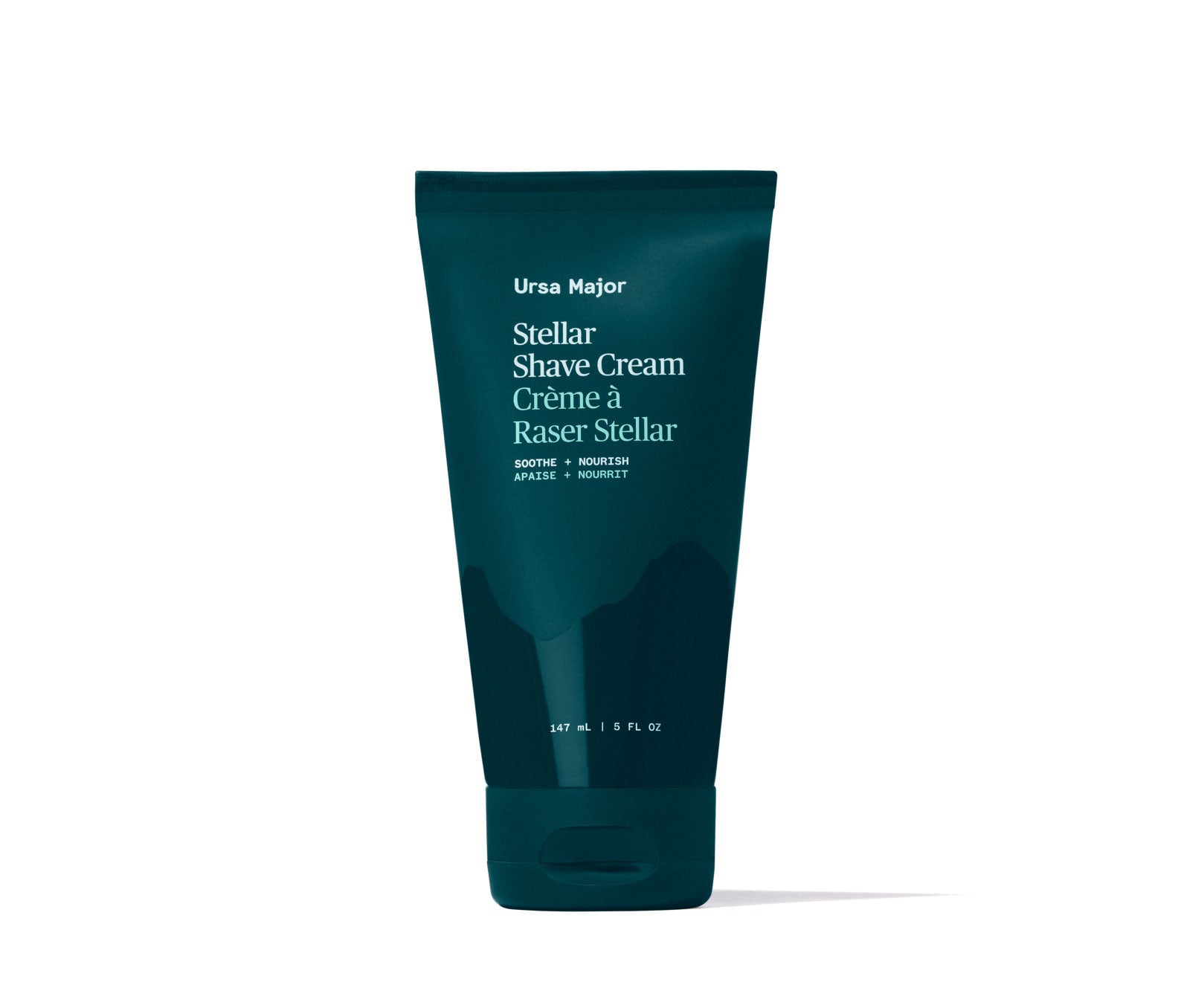
Stellar Shave Cream is non-lathering, soap-free, and completely free from petrochemicals, sulfates, parabens, and synthetic fragrance. That means no stripping, no artificial scent, and no harsh foaming agents working against your skin before the blade arrives. Instead, the formula relies on plant-derived lubricants and humectants - aloe, glycerin, and shea butter - to create a protective layer that lets the razor glide cleanly. The standout active is Willow Bark Extract, a natural source of salicylic acid (beta hydroxy acid) that helps manage ingrown hairs - a persistent issue for anyone with sensitive or curly-hair follicles. It has been featured by GQ and Men's Journal, and customers consistently note a close, smooth, nick-free result. Ursa Major is a B Corp certified, Plastic Negative, vegan, and cruelty-free brand based in Waterbury, Vermont - gender-neutral by design and available at Ulta, Credo, and Heyday alongside direct-to-consumer.
Loading...
$--2. EO Everyone Shave Cream
EO Everyone Shave Cream leans on plant-based essential oils for its light scent and stays easy to find at natural grocers. The texture runs thinner than dedicated sensitive-skin formulas, so very reactive skin may want more cushion.
3. Pacific Shaving Co. Natural Shaving Cream
Pacific Shaving Co. takes a lightweight gel-cream approach with a short, plant-derived ingredient list that absorbs fast. Shavers who dislike heavy residue tend to like it, though the thinner layer gives less glide protection over coarse hair.
4. Bulldog Original Shave Cream
Bulldog builds its Original Shave Cream on an aloe vera base, and the familiar cream texture makes it an easy first step away from conventional brands. It lathers more than true non-lathering formulas, which can feel drying on highly reactive skin.
5. Herbivore Botanicals Cloud Jelly Shave Oil
Herbivore Botanicals goes the oil route with Cloud Jelly, a vegan shave oil that leaves a protective film suited to dry or very sensitive skin. Oil formats can feel slick under a cartridge razor, so expect a short learning curve.
6. Dr. Bronner's Organic Shaving Gel
Dr. Bronner's Organic Shaving Gel offers a certified organic formula with a short, recognizable ingredient list. It goes on brisk and minimal rather than cushioning, so pair it with a rich post-shave moisturizer if your skin runs dry.
What to Look For: Clean Shave Cream Buying Criteria
Choosing a clean shave cream comes down to two lists: ingredients to avoid and ingredients to seek. Dermatologists recommend looking for hydrating actives and steering clear of anything that disrupts the skin barrier.
Ingredients to Avoid
- Parabens (methylparaben, propylparaben, butylparaben, and EU-banned variants)
- Sulfates (SLS and SLES)
- Synthetic fragrance or parfum
- Alcohol (drying and barrier-disrupting)
- BHT (a preservative that can irritate reactive skin)
Ingredients to Seek
- Aloe vera: Calms post-shave redness and delivers light hydration
- Glycerin: A humectant that draws moisture into the skin and supports the barrier
- Shea butter: Rich emollient that softens hair and protects skin during the blade pass
- Hyaluronic acid: Binds water to skin for sustained post-shave comfort
- Willow Bark Extract: Natural salicylic acid that helps prevent ingrown hairs
Certifications and Format
Look for vegan, cruelty-free, and B Corp certifications as reliable signals of clean, transparent formulation. On format: lathering creams typically rely on sulfates to create foam. Non-lathering creams skip that step entirely and deliver a denser, more protective lubricating layer - a gentler choice for reactive or dry skin types. If you want help building a complete sensitive-skin routine around your shave cream, this guide from Ursa Major is a useful starting point.
How to Shave Without Irritation: Five Technique Tips for Sensitive Skin
Even the cleanest formula will not fully protect skin if technique is off. These five steps make a measurable difference for reactive skin.
- Let the cream sit for 2-3 minutes before shaving. This softens the hair shaft and allows the formula's lubricating and soothing actives to penetrate the skin before any blade contact.
- Replace your blade every 5-7 shaves. A dull blade tugs at hair rather than cutting cleanly, increasing friction and the risk of ingrown hairs - particularly on sensitive skin.
- Shave with the grain on the first pass. Going against the grain on a first pass increases traction and skin trauma. With-grain passes on sensitive areas reduce razor burn significantly.
- Choose a safety razor when possible. Research shows that immediately after shaving, 40.3% of skin shaved with a safety razor showed redness, compared to 57.6% for a cartridge razor - a meaningful difference for reactive skin.
- Rinse with cool water and follow with a fragrance-free moisturizer. Cool water closes the follicle and reduces post-shave redness. A clean, fragrance-free moisturizer - like Ursa Major Golden Hour Recovery Cream - locks in hydration and supports barrier recovery.
Clean vs. Conventional Shave Cream: Ingredient Comparison
At a glance, here is how clean and conventional shave creams differ across the ingredients that matter most for sensitive skin.
| Category | Clean Shave Cream | Conventional Shave Cream |
|---|---|---|
| Lather agents | None (non-lathering) or plant-derived surfactants | SLS or SLES (sulfates) |
| Preservatives | Natural preservatives or preservative-free systems | Parabens, BHT, or formaldehyde-releasers |
| Fragrance | Essential oils or fragrance-free | Synthetic fragrance / parfum (undisclosed blend) |
| Skin-benefit actives | Aloe, glycerin, shea butter, hyaluronic acid, willow bark | Minimal or none |
| Certifications | Vegan, cruelty-free, B Corp, Plastic Negative (varies by brand) | Typically none |